
Epitope Tag Antibodies
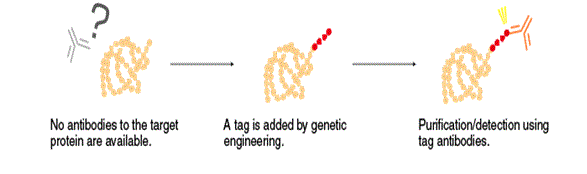
Epitope tags are small molecules or amino acid sequences attached to recombinant proteins.
Epitope Tag Antibodies
Epitope tag antibodies are highly specific monoclonal and polyclonal antibodies that provide a method to localize gene products in a variety of cell types.
Epitope tags (including small molecules, peptides, and proteins) can be attached to a molecule of interest by using chemical conjugation or genetic fusion. This allows detection of the tagged molecule with antibodies or other specific binding reagents that recognize the tag itself. Our epitope tag antibodies are conjugated with the most common dyes and enzymes used by researchers. For popular targets, conjugates to biotin, HRP, and Alexa Fluor dyes are available.
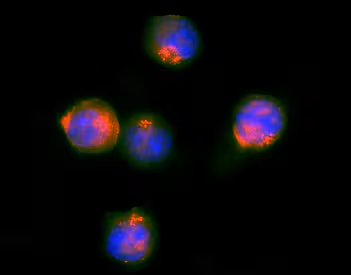
Epitope tags are often genetically engineered into recombinant proteins during cloning, providing a method for the detection and/or purification of the expressed protein.
They can be used to study the topology of proteins and protein complexes, identify associated proteins, and characterize newly identified, low-abundance proteins when specific antibodies are not available. Epitope tag antibodies are commonly used in structure/function studies where modified constructs are compared against native proteins.
Different types of epitope tags
| His Tag | c-Myc | FLAG tag (DYKDDDDK) | V5 | HA (Hemagluttinin) |
| Green Fluorescent Protein (GFP) | DIG (Digoxigenin) | FITC (Fluorescein Isothiocyanate) | APC (Allophycocyanin) |
Benefits: |
Valuable in many assay formats: |
|
|


